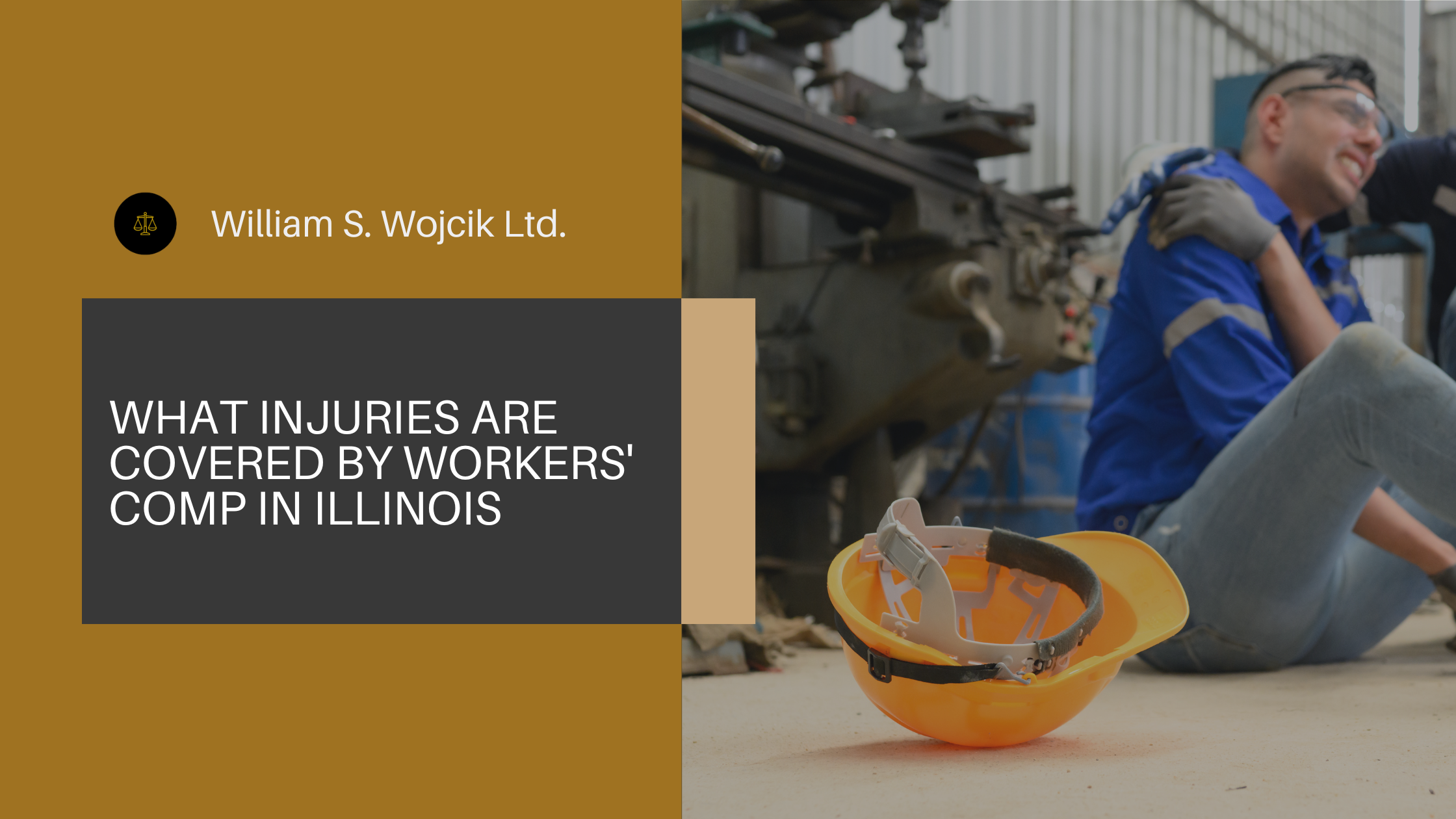
If you've been injured at work, one of the first questions you're likely asking is whether your injury qualifies for workers' compensation benefits.
The answer, in most cases, is yes, but understanding what injuries are covered by workers' comp in Illinois requires knowing how the law defines a compensable workplace injury.
Under the Illinois Workers' Compensation Act, nearly all injuries that occur in the course of employment are covered, regardless of who was at fault. This includes
Equipment accidents
Occupational diseases
Sudden traumatic injuries like falls
Gradual injuries that develop over time such as repetitive stress injuries
At William S. Wojcik, Ltd., we have represented injured workers throughout Oak Lawn, Chicago, and the southwest suburbs for over 38 years. If you've been hurt on the job and are unsure whether your injury qualifies for benefits, understanding the scope of Illinois workers' compensation coverage is the first step toward protecting your rights.
How Illinois Workers' Compensation Coverage Works
Illinois workers' compensation is a no-fault insurance system designed to provide medical care and wage replacement to employees who are injured on the job.
This means you do not need to prove that your employer was negligent or that the injury was anyone's fault. If the injury arose out of and occurred in the course of your employment, it is generally covered.
Key principles under the Illinois Workers' Compensation Act:
Arising out of employment: The injury must have a connection to your job duties or work environment. It does not need to be the sole cause, but your employment must be a contributing factor.
In the course of employment: The injury must occur while you are performing work-related tasks or during work hours in a location where your job requires you to be.
Employer liability is automatic: Illinois employers are required to carry workers' compensation insurance. If you are injured, your employer's insurance is responsible for covering your medical expenses and lost wages, regardless of fault.
There are very few exceptions to this rule. Most workplace injuries (whether they happen suddenly or develop gradually) fall within the scope of coverage.
Types of Injuries Covered by Workers' Comp in Illinois
Illinois workers' compensation law covers a broad range of workplace injuries and illnesses. Here are the main categories:
Acute Injuries
Acute injuries are sudden, traumatic events that occur at a specific time and place. These are the most commonly recognized workers' compensation claims.
Examples of covered acute injuries:
Burns, cuts, or lacerations
Falling objects striking a worker
Workplace assaults or altercations
Motor vehicle accidents during work duties
Lifting injuries (herniated discs, muscle strains)
Injuries from machinery or equipment malfunctions
Slip and fall injuries (fractures, sprains, head injuries)
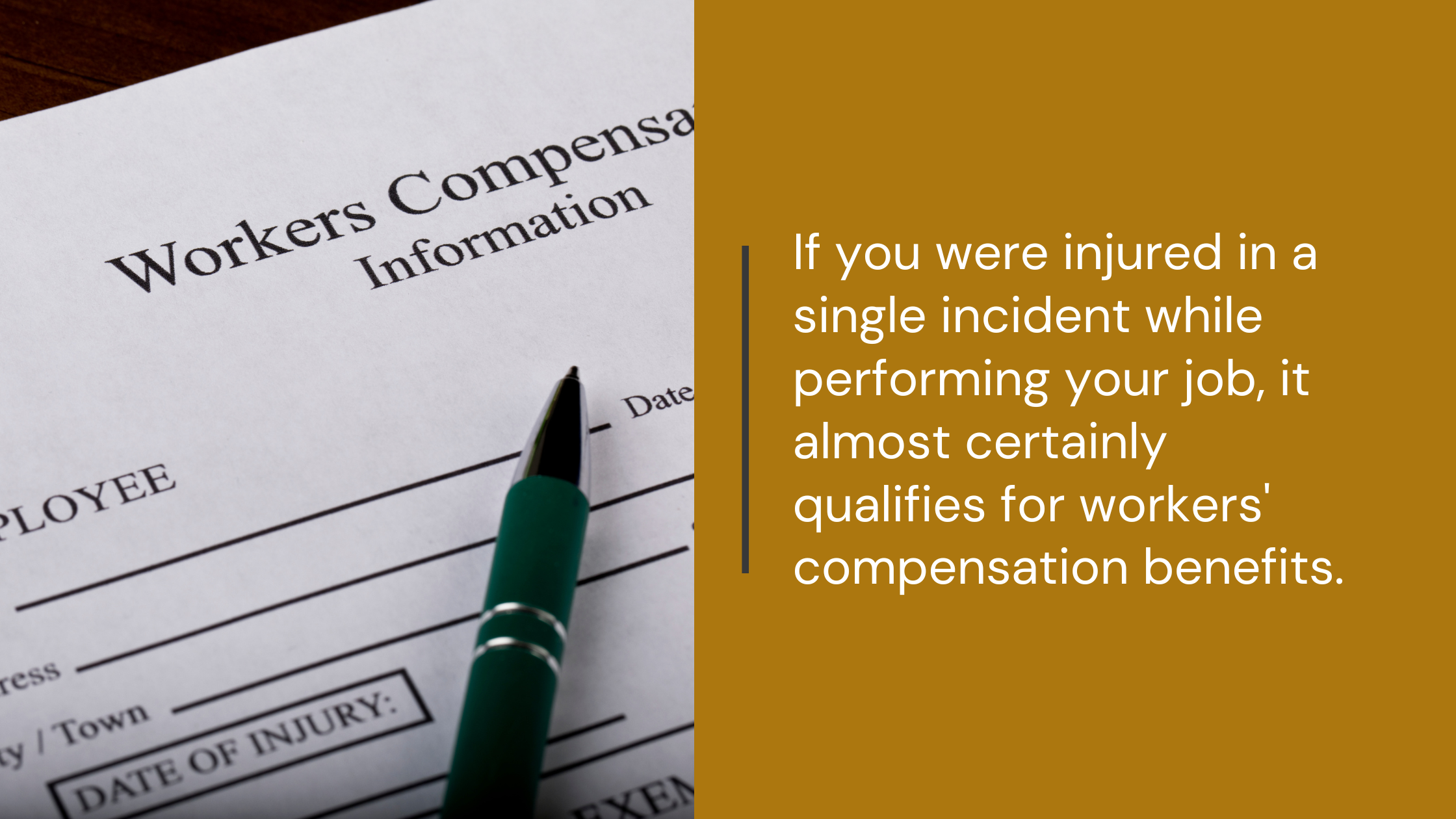
If you were injured in a single incident while performing your job, it almost certainly qualifies for workers' compensation benefits.
Repetitive Stress and Overuse Injuries
Not all workplace injuries happen in one moment. Take for example, carpal tunnel syndrome. It doesn’t happen in an instant, but rather gradually over time.
Repetitive stress/strain injuries develop over time due to repeated motions, prolonged physical strain, or continuous exposure to certain work conditions.
Examples of covered repetitive stress injuries:
Shoulder injuries from overhead work
Back injuries from chronic heavy lifting
Knee injuries from prolonged kneeling or standing
Tendonitis or bursitis (from repetitive lifting, reaching, or gripping)
Carpal tunnel syndrome (from typing, assembly line work, or tool use)
Repetitive stress injury workers' comp claims are fully covered under Illinois law, even though the injury may not have a specific date of occurrence.
What matters is that the injury resulted from your work duties.
Occupational Diseases and Illnesses
Occupational diseases and illnesses are chronic, work-related illnesses that happen because of prolonged exposure to:
Physical strain
Hazardous substances
Environmental conditions
Unlike a slip and fall accident, occupational diseases aren’t acute. Inhaling harmful dust or gases over time, for instance, can lead to respiratory disease.
Illinois workers' compensation also covers illnesses and occupational diseases caused by workplace exposure or conditions.
Examples of covered occupational diseases:
Skin conditions from chemical or irritant exposure
Hearing loss from prolonged exposure to loud noise
Respiratory illnesses from poor air quality or toxic fumes
Lung diseases from asbestos, silica dust, or chemical exposure
Infectious diseases contracted through work (healthcare workers, first responders)
Occupational disease claims can be more complex because you may need to establish a clear link between your work environment and your illness. Medical evidence and expert testimony are also often required.
Aggravation of Pre-Existing Conditions
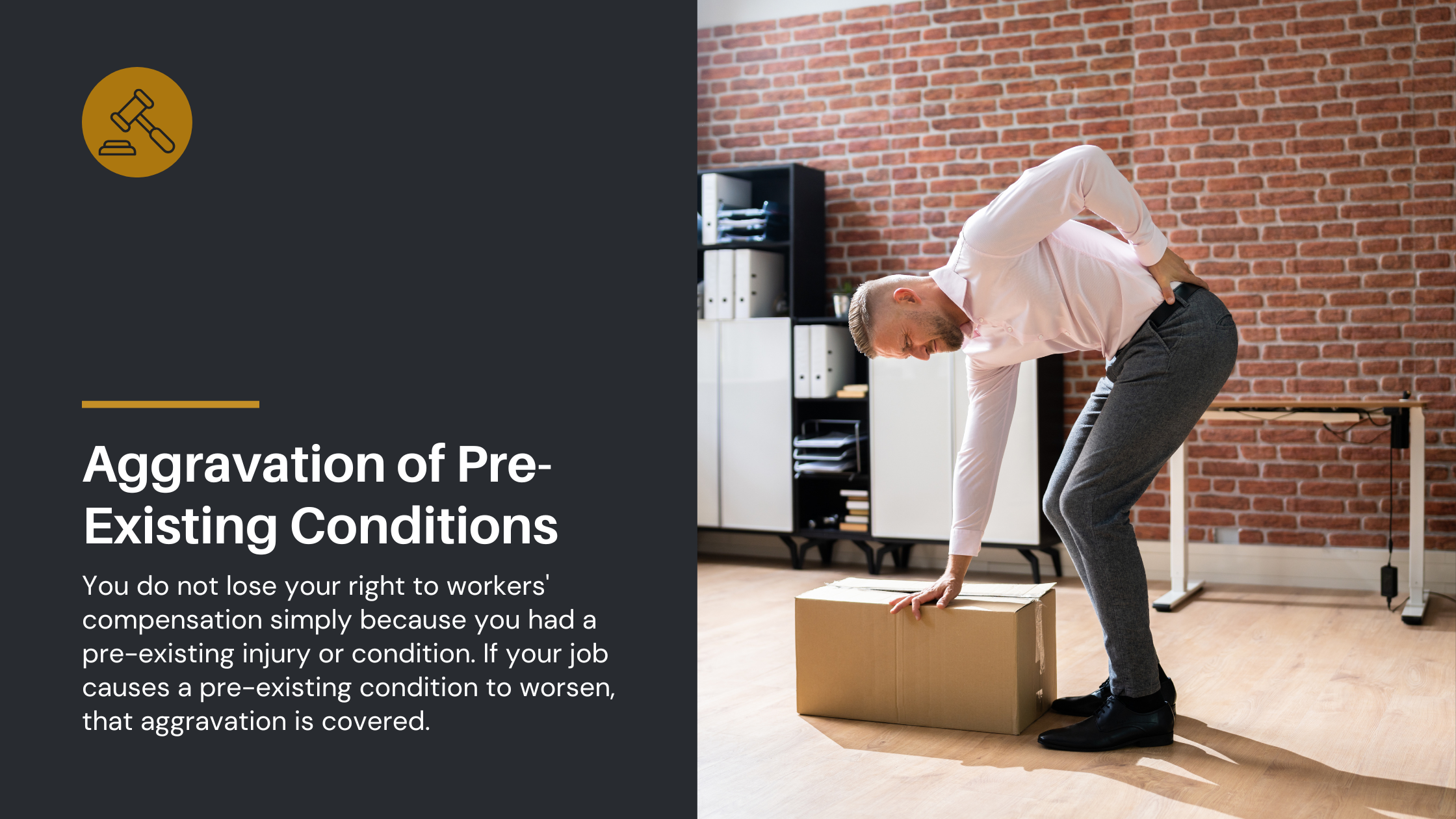
You do not lose your right to workers' compensation simply because you had a pre-existing injury or condition. If your job causes a pre-existing condition to worsen, that aggravation is covered.
Example: You have a prior history of lower back pain. While lifting heavy materials at work, you herniate a disc. Even though you had a pre-existing back condition, the work-related aggravation qualifies for workers' compensation benefits.
Illinois law recognizes that workers are taken as they are. Employers cannot deny coverage based on a pre-existing condition if the job contributed to making it worse.
Common Workers' Comp Injuries We Handle
At Wojcik Law, we represent Illinois workers with a wide range of injuries, including:
Back injuries: Herniated discs, lumbar strains, spinal injuries from lifting, falls, or repetitive motion. Back injury workers' comp claims are among the most common in Illinois.
Fractures and broken bones: From falls, vehicle accidents, or being struck by objects.
Head and brain injuries: Concussions, traumatic brain injuries from falls or workplace accidents.
Shoulder, neck, and arm injuries: Rotator cuff tears, frozen shoulder, nerve damage.
Knee and leg injuries: Torn ligaments, meniscus injuries, chronic joint damage.
Burn injuries: From chemical exposure, electrical accidents, or fire.
Amputations and crush injuries: From machinery or equipment accidents.
Repetitive motion injuries: Carpal tunnel, tendonitis, chronic pain conditions.
Hearing loss and respiratory conditions: From prolonged occupational exposure.
If your injury is not listed here, that does not mean it is not covered. Illinois workers' compensation law is broad, and most work-related injuries qualify for benefits.
What Injuries Are NOT Covered by Workers' Compensation
While Illinois workers' compensation covers most workplace injuries, there are a few exceptions every employee should be aware about:
Self-inflicted/self-harm injuries: Injuries caused intentionally by the employee are not covered.
Injuries caused by intoxication or drug use: If you were intoxicated or under the influence of illegal drugs at the time of the injury, your claim may be denied.
Injuries during horseplay or fighting: Injuries that occur while the employee is engaged in non-work-related activities, such as fighting or horseplay, may not be covered.
Injuries outside the course of employment: If you are injured while not performing work duties, such as during a personal errand or social event unrelated to work, the injury may not qualify. Typically, injuries that happen outside of work or are non-work related, are classified as short-term disability.
Commuting injuries: Injuries that occur during a normal commute to or from work are generally not covered, unless you were performing a work-related task at the time.
If your claim has been denied based on one of these exclusions, it is important to consult with an attorney. Employers and insurers sometimes wrongly classify injuries as excluded when they are, in fact, covered.
What to Do If You're Injured at Work in Illinois
If you are injured on the job, taking the right steps immediately can protect your ability to receive benefits:
1. Report the injury to your employer immediately
Illinois law requires you to notify your employer of a workplace injury within 45 days. Delaying this notice can jeopardize your claim. Report the injury verbally and in writing if possible.
2. Seek medical treatment
Get medical care as soon as possible, even if the injury seems minor. Your employer or their insurance company may direct you to a specific doctor. Follow their instructions. However, you are allowed to choose your own doctor after the initial treatment.
3. Document everything
Keep records of the incident, your injuries, medical treatment, and all communication with your employer and the insurance company.
4. File a workers' compensation claim
Your employer should provide you with the necessary forms to file a claim. Filing a workers compensation claim can be done on your own or with legal help. For cases where you’re dealing with an occupational disease or complicated case, it’s best to contact a workers compensation attorney to ensure the claim is filed correctly and on time.
5. Consult with a workers' compensation attorney
Insurance companies do not always act in your best interest. Most pressure you into settling for a lowball offer. An experienced workers comp attorney in Illinois can help you understand your rights, negotiate fair benefits, and represent you if your claim is disputed or denied.
How Wojcik Law Can Help with Your Workers' Comp Claim
Workers' compensation claims can be complicated, especially when dealing with serious injuries, disputed claims, or employer pushback.
At William S. Wojcik, Ltd., we can help you:
Appeal denied claims
File your claim correctly and on time
Negotiate with insurance companies for fair compensation
Gather medical evidence and documentation to support your case
Determine whether your injury qualifies for workers' compensation
Represent you at hearings before the Illinois Workers' Compensation Commission
Our firm operates on a contingency fee basis, which means you pay nothing unless we recover benefits for you. Let us handle the legal process.
If you've been injured at work and have questions about what injuries are covered by workers' comp in Illinois, contact William S. Wojcik, Ltd. today.
Or for a direct appointment, call 708-424-2121 for a free consultation. We serve clients throughout Oak Lawn, Chicago, Chicago Ridge, Bridgeview, Burbank, and the surrounding southwest suburbs. You have rights as an injured worker. Let us help you protect them.